
There are two types of people interested in how to look for magic mushrooms: those who think it’s enough to just go out into the field and bend down, and those who already know that this mindset is exactly how memorable disasters begin.
Because no, magic mushrooms don’t appear with a neon sign saying “pick me.” And not everything that looks like them is a friend. Some only need you to make one mistake to ruin your day, your week, or something worse. That is why, before heading out to the hills with enthusiasm and zero criteria, it is worth knowing what you are looking for, where, and why not everything goes.
This article is not about getting high or promising mystical experiences. It is about avoiding rookie mistakes, understanding the real risks, and learning how to look for magic mushrooms without playing mycological Russian roulette.
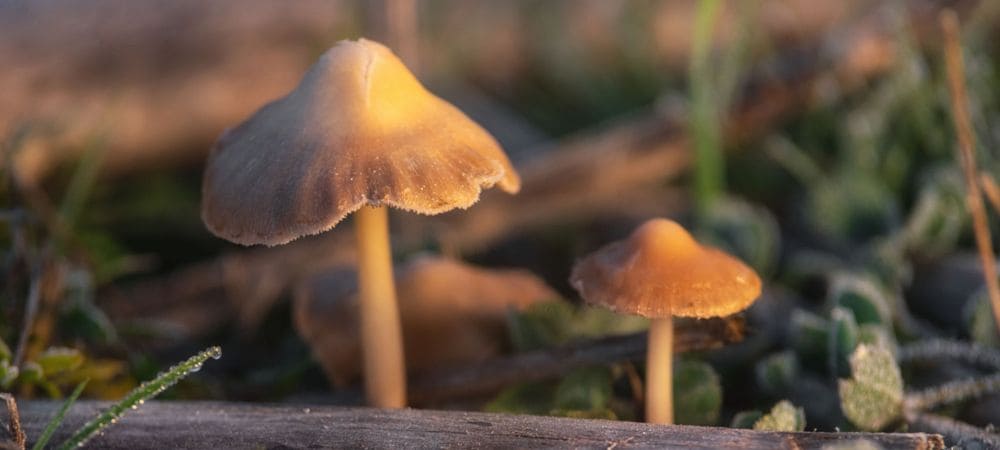
What are magic mushrooms?
Magic mushrooms are fungi that contain psilocybin, a psychoactive compound that, when metabolized, turns into psilocin. That is where their hallucinogenic effects, their fame, and also a good part of the misunderstandings surrounding them come from.
Beyond recreational use, psilocybin is being researched in controlled clinical settings for its potential therapeutic utility. Research does not mean a free-for-all, nor an approved treatment, nor an excuse to take it lightly. It is worth making this clear from the beginning so as not to mix science with fantasy.
What is really important is this: not all magic mushrooms look the same and many mushrooms that look like them are not magic. That is where the mistakes begin. Furthermore, it is worth being clear that some mushrooms are poisonous and do not just cause a scare, but serious health problems.
Identifying correctly: where curiosity is separated from trouble
Identifying a mushroom correctly is not intuitive. It is not enough that it “looks like it,” “bruises a little blue,” or “someone said so on a forum.” There are different species that share shape, size, or color, and some of them do not forgive carelessness.
Mushrooms of the Psilocybe genus usually share certain general traits, but none of them is a definitive test on its own.
Common traits in many psychoactive mushrooms
The most common magic mushrooms, such as Psilocybe cubensis or Psilocybe semilanceata, have unique characteristics that will allow you to identify them with precision. Some of the most prominent signs include:
- Convex cap: Often a light brown or golden color, with a lighter edge and often presenting a moist appearance. They may also have a small bump in the center.
- Thin and relatively long stem: White or pale yellow in color. When handled, some species may show a characteristic bluish or greenish color due to the oxidation of their psychoactive compounds.
- Dark gills: Attached to the stipe (stalk), initially pale in color, evolving to dark purple-brown tones as the spores mature.
- Spore print: The spore print (the mass of spores released by the gills) is usually dark purple to black.
Some species show bluing when handled, caused by the oxidation of compounds present. Careful: not all magic mushrooms bruise blue, and not everything that bruises blue is safe. This is one of the most dangerous myths.
Differences from toxic species
This is where it is worth getting serious. There are toxic mushrooms that grow in similar habitats and can deceive those who are in a hurry or overconfident. It is essential to learn to recognize the differences between poisonous species to know how to look for magic mushrooms safely. Some poisonous mushrooms, such as Galerina marginata, have an appearance similar to that of magic mushrooms but present key differences, such as the presence of a ring on the stem or a bright cap color. Never take risks if you are not completely sure of the identification. Consult detailed field guides and, if possible, seek the company of an experienced expert.
The rule is simple and not at all romantic: if you have doubts, don’t proceed. No mushroom is worth a serious health scare.
Where and when to look for them
Magic mushrooms don’t appear just because or when one wakes up inspired. They need very specific conditions: humidity, proper temperature, correct substrate, and time of year.
They usually appear after periods of rain, especially in humid seasons like autumn or spring, depending on the region. Meadows, wooded areas, and soils rich in organic matter are common environments, but that doesn’t guarantee anything.
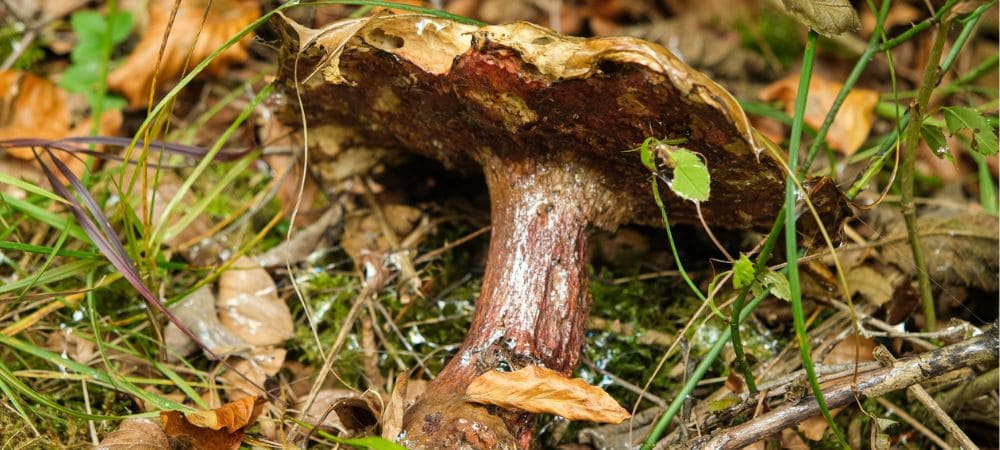
Knowing how to look for magic mushrooms starts long before leaving home: informing yourself about your area, the climate, and the species that grow there is not optional.
Basic tools for foraging
You don’t need to go loaded as if you were going on an expedition, but don’t go blindly either.
- Wicker basket or paper bag: Avoid plastic bags, as they can generate humidity and affect the quality of the mushrooms.
- Small knife or scissors: so as not to destroy the environment. A good knife will allow you to cut the mushroom without damaging its structure.
- Reliable mycological guide: better something verified than a screenshot. A good mushroom identification guide is essential to know which species you are collecting. Additionally, there are online communities and forums where you can share photographs to get opinions (always with caution and seeking multiple confirmations).
- Patience: essential, even if it doesn’t come in a kit
Apps can serve as visual support, but they should never be the only source. An app won’t take the fall if you make a mistake.
How to collect without ruining what isn’t yours
Here is where respect comes in. The mycological ecosystem is not infinite and does not regenerate based on enthusiasm.
Cutting the mushroom or twisting it gently are common and valid methods if done with care. What is not: pulling, disturbing the soil, or taking everything “just in case.” Looking for mushrooms is not about quantity, it’s about criteria.
Legality: the detail many prefer to ignore
The legislation on magic mushrooms changes according to the country and region. In many places, the collection, possession, or transport of mushrooms with psilocybin is prohibited, regardless of whether they grow naturally.
Informing yourself before going out into the field is part of doing it right. Just because something exists in nature does not mean it is legal to take it home.
Hygiene, safety, and keeping your head
Handling mushrooms is usually not dangerous by contact, but it is advisable to maintain minimal precautions: clean hands, separated species, and zero ingestion without absolute identification.
If you are a beginner, don’t go alone or improvise. Here, overconfidence is the most common mistake.
Beginner mistakes when looking for magic mushrooms
When someone starts to get interested in how to look for magic mushrooms, they usually do so with more enthusiasm than criteria. It’s normal. The problem is that most mistakes don’t come from bad intentions, but from trusting too much too soon. And in mycology, misplaced trust is a classic.
One of the most common failures is thinking that seeing a couple of photos is enough. Spoiler: it is not. Mushrooms change according to age, humidity, environment, and even the specific day you observe them. A young mushroom may look nothing like the same mature species, and basing identification on a single image is a perfect recipe for making a mistake.
Another typical mistake is looking for quick confirmation on the internet. Uploading a photo to a forum or an app and sticking with the first reassuring answer is tempting, but dangerous. Even experienced people can make mistakes by looking at a partial image. Reliable identification is not done in a hurry or with a single opinion.
It is also very common to obsess over a single trait, such as the famous bluing. Many beginners believe that if a mushroom bruises blue when touched, everything is clear. Nothing could be further from the truth. There are mushrooms that bruise blue and are not psychoactive, and psychoactive mushrooms that barely show that effect. Focusing on a single detail is one of the most repeated… and most avoidable mistakes.
The environment also deceives. Thinking that “if it grows here, it must be it” is another mental trap. Just because a mushroom appears in a meadow, near livestock, or in a humid area does not automatically make it a magic mushroom. Habitat helps, but it never confirms.
Finally, there is the silent mistake: taking mushrooms “to look at later at home.” Mixing species, transporting them without identifying them, or trusting that the doubt will be cleared up later is playing with fire. If you are not clear about what a mushroom is at the time of picking it, the most sensible thing is to leave it where it is.
Learning how to look for magic mushrooms is not about accumulating finds, but about reducing errors. And that, although it sounds less epic, is what really makes the difference between informed curiosity and getting into unnecessary trouble.
Taking care of the environment is also part of the game
Don’t step just to step, don’t break things out of curiosity, and don’t destroy what you aren’t going to use. Fungi play a key role in the ecosystem, and destroying them out of ignorance is short-term gain and a long-term problem.

At Smartshop Love, we share this content for informational and educational purposes. We do not promote consumption or encourage illegal or irresponsible practices.
Curiosity is fine; information is better. But responsibility cannot be delegated: each reader decides what to do with what they learn here and must always do so with a clear head, respect for the environment, and in accordance with current legislation.
Getting informed is the first step. Doing it right is the important one.